
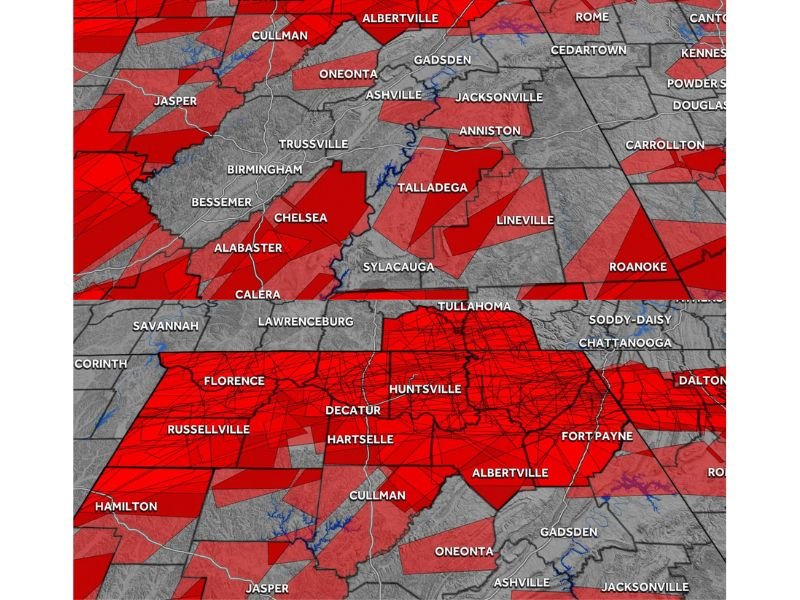
ALABAMA — A striking and unusual pattern has emerged across Alabama’s tornado warning history since February 18, 2022, revealing a dramatic gap in warning activity between Jefferson County and surrounding regions of the state. While communities across North Alabama and the Tennessee Valley have repeatedly taken shelter from tornado warnings over the past four years, Jefferson County has gone an extraordinary 1,513 consecutive days without receiving a single tornado warning, a streak that is now drawing renewed attention from weather forecasters and emergency preparedness officials alike.
The Numbers That Tell a Startling Story
The contrast in tornado warning activity across Alabama since February 18, 2022 is difficult to overlook. Jefferson County has recorded zero tornado warnings during that entire span. Madison County, located in North Alabama and home to Huntsville, has received 26 tornado warnings over the same period. Most striking of all, areas north of US-278 have accumulated over 200 individual warning polygons since that date, painting a picture of just how active the surrounding region has been while Jefferson County has remained in near-complete silence.
By next Friday, April 17, Jefferson County’s warning-free streak will reach 1,520 days, a milestone that forecasters say underscores just how unusual this quiet period truly is for a county situated in one of the most tornado-prone states in the nation.
What the Warning Maps Reveal About Alabama’s Tornado Pattern
First Warning Weather maps tracking Alabama tornado warnings since February 18, 2022 show dense red warning polygons blanketing communities including Huntsville, Florence, Cullman, Albertville, Gadsden, Anniston, Trussville, Talladega, Jasper, and dozens of other areas across North and Central Alabama. The red coverage across these regions is extensive, with warning polygons stacked upon one another across multiple severe weather events over the past four years.
By comparison, the Jefferson County area, which includes Birmingham, Bessemer, Alabaster, and Chelsea, appears noticeably quieter on those same maps. The visual contrast between the warning-saturated areas to the north and the relative silence over Jefferson County is, as forecasters have described it, almost hard to believe given the county’s historical vulnerability to severe weather.
Complacency Is the Hidden Danger Behind the Quiet Streak
Weather officials are issuing a clear warning alongside the remarkable statistics: a long stretch of quiet is not a guarantee of future safety, and it can quietly breed a dangerous sense of complacency among residents who have not needed to use their storm shelters in years. Jefferson County’s 1,513-day streak is described as a blessing, but forecasters are emphatic that it will not last forever.
The concern is that residents who have not entered their storm shelters since early 2022 may find those shelters unprepared for actual use when the next warning finally does arrive. Clearing out clutter, removing stored items, and confirming that emergency supplies are functional are steps that need to happen now, not in the middle of a tornado warning.
Spring Is the Right Time to Inspect and Prepare Your Storm Shelter
With Alabama’s severe weather season underway, forecasters are urging residents across the state, and particularly those in Jefferson County who may have grown accustomed to quiet conditions, to conduct a thorough inspection of their storm shelters this spring. A shelter that has sat unused for four years may have accumulated cobwebs, wasp nests, and clutter that renders it difficult or unsafe to use in an emergency.
Residents are advised to clear out any items stored in the shelter over the winter, remove any pest nests that may have developed, and ensure the space can comfortably and quickly accommodate every member of the household. Emergency supplies including flashlights, fresh batteries, and a functioning NOAA weather radio should also be checked and replaced as needed.
A NOAA Weather Radio Check Could Save Your Life
One of the most critical but often overlooked components of storm shelter preparedness is ensuring that a NOAA weather radio is operational and properly programmed. A weather radio that emits an unusual or high-pitched noise when activated, or that fails to respond at all, should be replaced immediately before severe weather season reaches its peak.
Forecasters stress that having multiple reliable ways to receive tornado warnings, including a weather radio, a smartphone with alerts enabled, and awareness of local sirens, is essential for all Alabama residents regardless of how many or how few warnings their county has received in recent years.
Are you taking steps to prepare your storm shelter this spring? Share your experience and stay weather aware at readcultured.com.
Leave a Reply