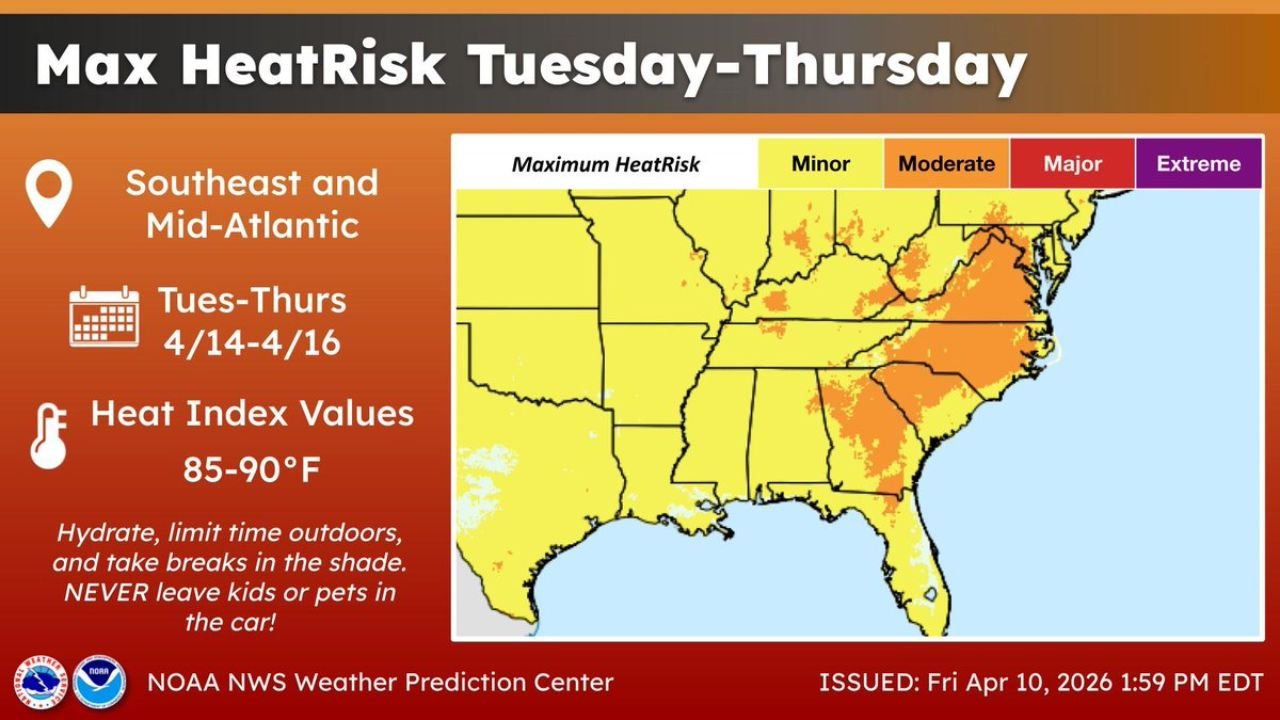
UNITED STATES — A significant early-season heat surge is expected to impact the Southeast and Mid-Atlantic from April 14 through April 16, with cities including Atlanta, Charlotte, Raleigh, Richmond, and Washington DC forecast to see temperatures climbing into the upper 80s, marking one of the first widespread summer-like stretches of the year.
Summer-Like Heat Expands Across Southeast And Mid-Atlantic
The incoming pattern will push unseasonably warm air across much of the eastern United States, particularly impacting states such as Georgia, South Carolina, North Carolina, Virginia, and Maryland.
Major cities including Atlanta, Columbia, Charlotte, Raleigh, and Richmond are expected to experience daytime highs ranging from 85°F to near 90°F, well above typical mid-April averages.
Farther north, Washington DC and surrounding areas will also see temperatures climbing into the mid to upper 80s, bringing an early taste of summer conditions to the region.
This warming trend signals a clear shift in the overall pattern, with spring accelerating rapidly toward summer-like conditions.
Heat Index And Humidity Begin To Increase
In addition to rising temperatures, increasing humidity levels will make conditions feel even warmer, particularly during the afternoon hours.
Across cities like Charlotte, Raleigh, and Washington DC, the heat index values are expected to approach or slightly exceed 85 to 90 degrees, especially in areas with higher moisture levels.
While this is not considered extreme heat, it is notable for mid-April, when many areas are still transitioning out of cooler spring weather.
Residents may begin to notice:
- Warmer mornings and nights reducing overnight cooling
- Increased discomfort during peak afternoon hours
- Higher demand for cooling systems earlier than usual in the season
Moderate HeatRisk Develops In Key Urban Areas
Forecast data indicates a Moderate HeatRisk developing across parts of the Carolinas, Virginia, and the Mid-Atlantic, particularly in urban corridors.
Cities such as Atlanta, Charlotte, Raleigh, Richmond, and Washington DC are more vulnerable due to:
- Urban heat island effects
- Higher population density
- Increased exposure for outdoor workers and commuters
While most areas fall within a Minor to Moderate HeatRisk category, the early timing of this heat event increases its significance, as many people are not yet acclimated to summer-like temperatures.
Health And Safety Concerns Rise With Early Heat
Even though temperatures are not reaching extreme levels, early-season heat can still pose risks, especially for:
- Children and the elderly
- Outdoor workers and athletes
- Pets left in vehicles or without adequate shade
Officials recommend taking simple precautions such as:
- Staying hydrated throughout the day
- Limiting prolonged outdoor exposure during peak heat hours
- Taking frequent breaks in shaded or air-conditioned environments
The risk is heightened because this heat arrives earlier than typical seasonal patterns, catching many residents off guard.
Pattern Suggests Continued Warm Trend Ahead
This heat surge is part of a broader atmospheric pattern that is favoring above-average temperatures across the eastern United States.
With limited signs of significant cooling immediately following this event, cities like Atlanta, Charlotte, Raleigh, and Washington DC may continue to experience warmer-than-normal conditions through mid-April.
This could also contribute to:
- Earlier onset of summer-like weather patterns
- Increased energy usage for cooling
- Potential stress on individuals not yet adapted to heat
As the pattern evolves, additional warm spells may follow, reinforcing the early arrival of summer conditions across the region.
For more updates on weather patterns, temperature swings, and regional impacts across major cities, visit ReadCultured.com and stay informed as this early-season heat event unfolds.
Leave a Reply